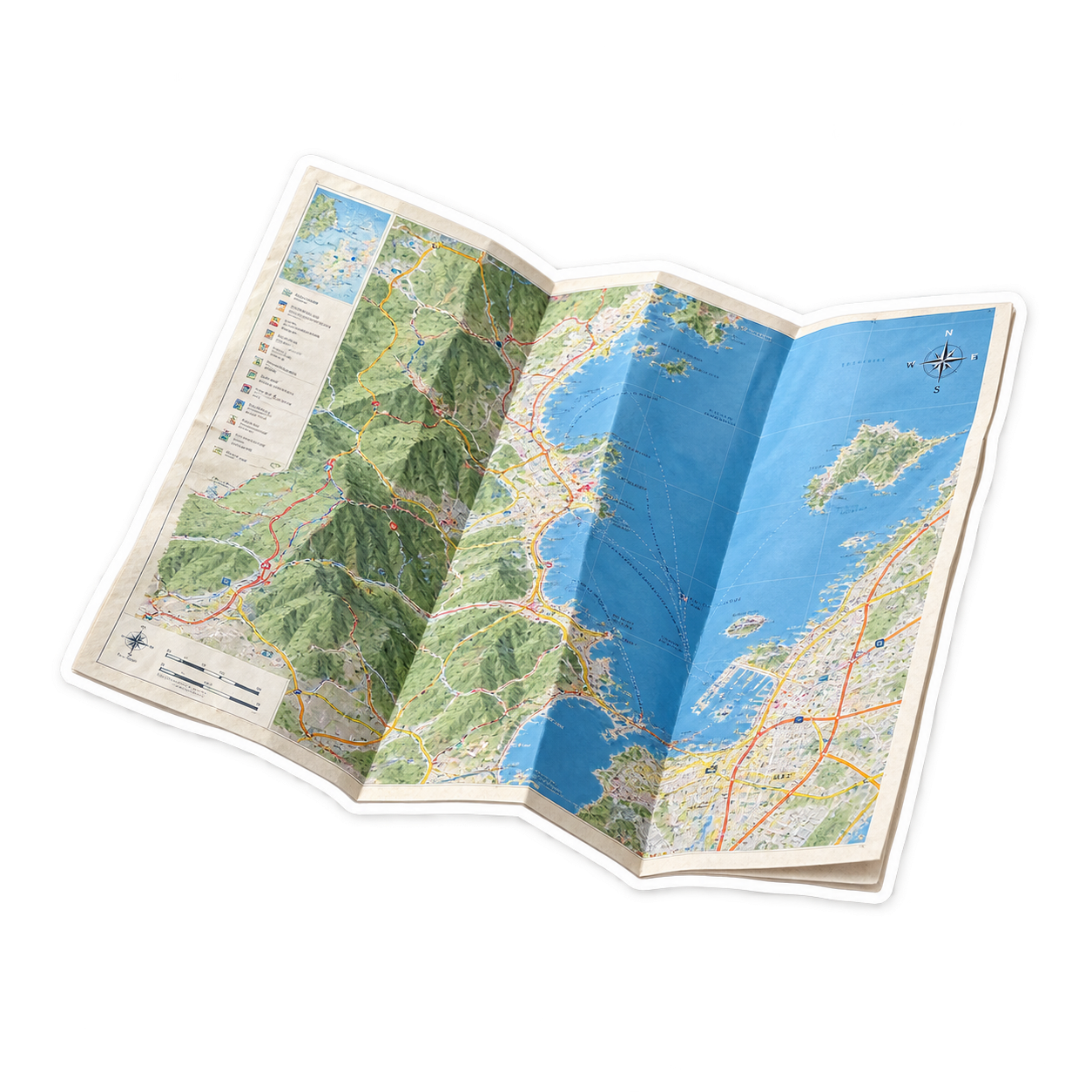

One trip, many client views
Keeping H5, PDF, maps, and service notes aligned from the same structured trip.

Travel is experienced as a sequence of moments, but it is still commonly delivered as a static file. Closing that gap changes how the itinerary is structured, edited, and shared.
A PDF is not the journey
Most itinerary documents are assembled for approval, not for use. They describe a trip but rarely help a traveler understand the rhythm of a day, the relationship between places, or the moment when a booked service matters.
Structure comes first
A dependable travel journal begins with structured days, places, timing, stays, and service nodes. Visual design can then express the story without hiding operational truth. When the route changes, every client view can update from the same source.
The useful view changes with the moment
Before departure, travelers need anticipation and preparation. During the trip, they need orientation and fast access. After the trip, they want memory. H5, print, and map views should share data while serving different moments.
The travel journal is not the final decoration applied to a trip. It is the usable expression of the trip's structure.
 Written by the JourniOne product team